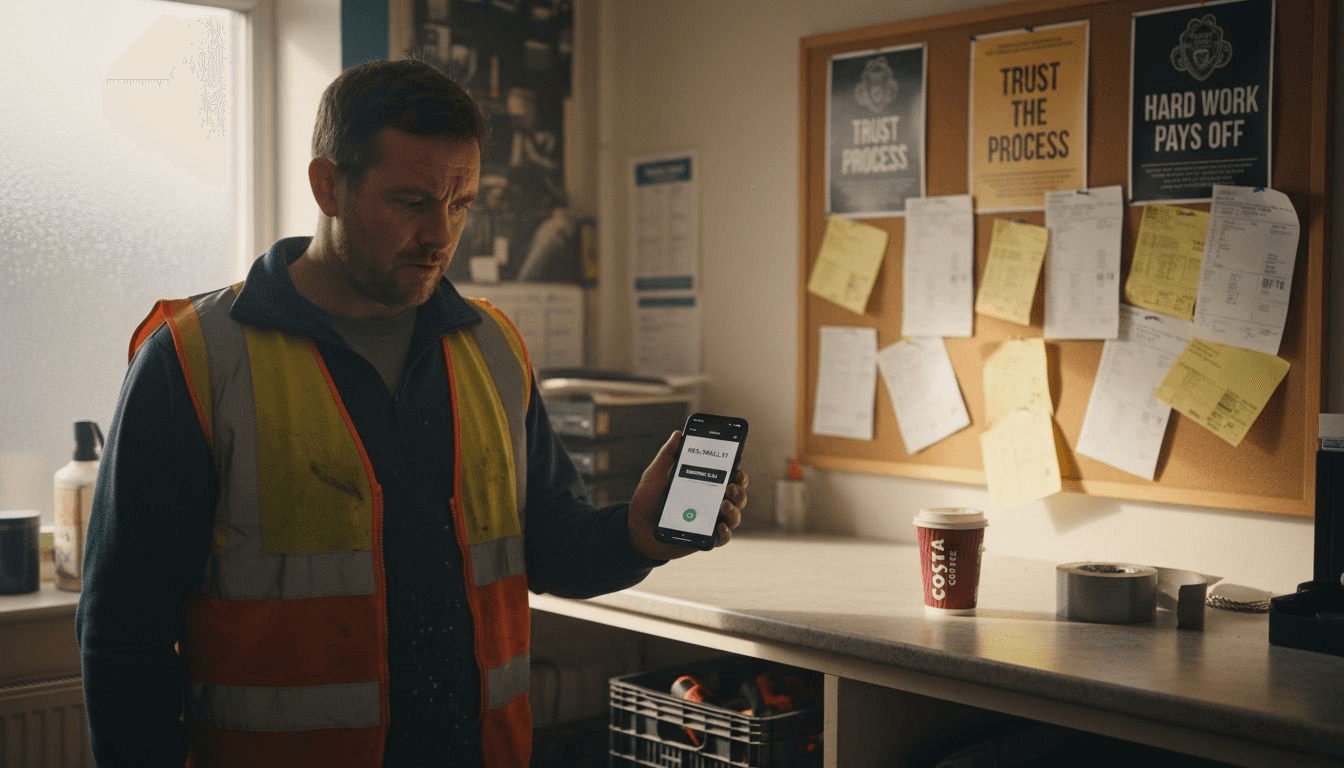
Juggling missed calls, paperwork, and unpredictable bookings is familiar territory for Irish plumbers, electricians, and HVAC professionals. The promise of AI automation offers a way to turn these daily headaches into measurable business growth—but understanding the true ROI is not as straightforward as counting invoices or tool receipts. This guide breaks down how to define and measure real impact from AI, focusing on operational efficiency, increased revenue, and smarter staff allocation that can transform your business within 90 days. Quantifying genuine business impact means tracking actions like appointments booked and labour hours recovered, not just cutting costs.
Table of Contents
- Defining ROI of AI Automation in Trades
- Core AI Automation Types for Irish Businesses
- Operational Impact: Case Studies and Practical Benefits
- Measuring ROI: Methods and Key Indicators
- Risks, Barriers, and Mistakes to Avoid
Key Takeaways
| Point | Details |
|---|---|
| Understanding AI ROI | AI ROI in trades measures the real business impact, focusing on factors like lead conversion and time efficiency rather than just costs. |
| 90-Day Measurement Window | Results from AI implementations often become visible within 90 days, enabling businesses to track immediate improvements in operations and revenue. |
| Importance of Type Selection | Choosing the right type of AI automation tailored to specific business needs significantly enhances ROI by addressing critical pain points. |
| Data Quality and Integration | Ensuring high-quality data and seamless integration with existing systems is crucial to avoid implementation failures and maximise ROI. |
Defining ROI of AI Automation in Trades
ROI in trades AI automation isn't the same as measuring your tools or van costs. It's about quantifying genuine business impact—revenue gained, time freed, leads converted—from AI systems running your customer interactions and operations.
Traditional ROI measures straightforward expenses against returns. With AI automation, you're measuring something more complex. Your investment includes software, integration, and operational restructuring. Your returns span reduced response times, higher conversion rates, and staff time redirected to profitable work.
What Makes AI ROI Different
AI investments typically mature differently than purchasing equipment. AI ROI often requires fundamental operational changes before you see measurable returns—this isn't like buying a new drill that pays for itself immediately.
Here's what separates AI ROI from traditional calculations:
- Lead velocity: Calls answered immediately instead of during business hours
- Conversion improvement: Qualified leads scheduled automatically versus lost inquiries
- Labour reallocation: Your team handles profitable jobs instead of answering phones
- Data accuracy: Consistent client information reducing callbacks and errors
- Scalability speed: Handling 10x call volume without hiring 10x staff
For Irish plumbers, electricians, and HVAC specialists, this means quantifying what happens when your AI voice agent answers every inbound call, qualifies the customer, and books qualified appointments—24/7, without staff.
Tangible Metrics You Measure
AI ROI in trades focuses on metrics your P&L actually reflects. Valuation approaches examine both operational improvements and strategic advantages that create measurable value.
Measurable outcomes include:
- Appointment booking rate: Percentage of qualified calls resulting in booked jobs
- Cost per lead: Total AI investment divided by leads generated monthly
- Conversion to revenue: How many AI-qualified leads become paying customers
- Response time: Average minutes from call to human handoff or scheduled appointment
- Labour hours recovered: Staff time redirected from administration to billable work
These aren't abstract concepts—they appear on your bank statements within weeks, not years.
AI automation ROI for trades emerges through measurable customer actions: calls answered, leads qualified, and appointments booked—not through cost-cutting alone.
Why 90 Days Matters
Traditional enterprise AI deployments take months to show results. Trades operate differently. An AI voice agent deployed today can answer calls tomorrow and generate measurable data within days.
Your 90-day window captures:
- Baseline call volume and response metrics
- Immediate improvements in answer rates and booking
- Early revenue attribution from AI-sourced leads
- Team productivity gains as automation handles routine inquiries
This timeframe proves ROI exists before scaling further or adjusting your approach. Most trades see measurable improvement within 30 days.
Pro tip: Set up tracking before deployment—record your current call answer rate, average response time, and manual booking volume so you have clear baseline data to measure AI improvements against.
Core AI Automation Types for Irish Businesses
Irish trades aren't one-size-fits-all operations. Your plumbing business runs differently from electrical or HVAC work. AI automation types vary based on what you're actually trying to automate—customer interactions, job scheduling, data processing, or decision-making.
Understanding which automation types solve your specific problems ensures you're not paying for features you'll never use. The right type depends on your current workflow, team size, and business goals.
Voice-Based Customer Interaction Automation
AI voice agents handle inbound calls without human intervention. They answer calls 24/7, qualify customers by asking about their problem, collect essential information, and book qualified appointments directly into your system.
This automation type works because:
- Customers reach a real conversation, not an automated menu
- Agents qualify prospects before scheduling (no time-waster appointments)
- Calls answered immediately, regardless of time or day
- Integration with your job management system happens automatically
For Irish trades, this eliminates the most common problem: missed calls during peak work hours. Your team stays on jobs while calls get answered and qualified.
Operational Data Processing
Industry-specific AI solutions address unique operational challenges particular to trades. This automation type processes job data, client histories, and scheduling information without manual data entry.
When a customer calls about a boiler repair, the AI retrieves their previous service history, identifies patterns, and suggests relevant services. Your team gets context instantly.
Operational data automation captures:
- Historical client information automatically
- Job completion records linked to customer profiles
- Service recommendations based on past work
- Scheduling gaps filled intelligently
Lead Qualification and Routing
Not all inquiries deserve equal attention. AI automation categorises incoming leads by job type, urgency, and profitability before your team sees them.
An emergency call about heating failure routes instantly to your available HVAC technician. A general inquiry goes to your administrative team for follow-up. This routing happens automatically, saving time and improving response quality.
Multi-Channel Customer Engagement
Different automation types orchestrate digital transformation by connecting voice calls, text messages, email, and social media through one system. Customers reach you however they prefer—your team sees all interactions in one place.
When someone texts asking about your services, the same AI system responds, qualifies them, and books appointments via text or voice callback.
Effective AI automation for trades combines voice handling, data processing, and intelligent routing—not just one tool doing everything poorly.
Why Type Selection Matters
Choosing the right automation type means measuring what actually matters to your business. If 80% of your lost business is missed calls, voice automation drives ROI fastest. If your bottleneck is scheduling and data entry, operational automation solves that problem instead.
Most successful Irish trades deployments combine multiple types working together. Your voice agent answers calls and captures data. Operational systems process that information. Routing systems direct jobs to the right technician.
Here's a summary of AI automation types and their typical business impact for Irish trades:
| Automation Type | Main Function | Key Benefit for Trades |
|---|---|---|
| Voice Customer Interaction | Handles inbound calls 24/7 | No missed calls, more bookings |
| Operational Data Processing | Manages client/job data automatically | Fewer errors, faster workflows |
| Lead Qualification & Routing | Categorises and prioritises leads | Higher quality jobs, less wasted time |
| Multi-Channel Engagement | Integrates calls, texts, email, social | Consistent customer experience |
Pro tip: Audit your current workflow for your single biggest pain point—missed calls, manual booking, data errors—then select the automation type directly addressing that problem first, not the flashiest solution.
Operational Impact: Case Studies and Practical Benefits
Theory doesn't pay bills. Real Irish trades businesses see measurable operational improvements within weeks of deploying AI automation. These aren't hypothetical gains—they're documented results from businesses like yours handling calls, bookings, and customer data.
Let's look at what actually happens when AI automation runs your customer interactions.
Call Answer Rate and Response Time
Most Irish trades lose business simply because nobody answers the phone. A plumbing business receives 30 calls daily, but staff answer only 18 because they're on jobs. Nine calls go to voicemail. Three customers call competitors instead.
AI voice agents answer all 30 calls immediately. Within the first 30 days, call answer rate jumps from 60% to 100%. That's 12 additional qualified conversations monthly with potential customers who would have otherwise disappeared.
Response time drops from hours (when staff listen to voicemails) to seconds (AI answers live).
Appointment Booking Automation
Intelligent automation in operational processes delivers measurable efficiency gains including faster processing and error reduction. AI voice agents qualify callers and book appointments directly into your system without human intervention.
A typical HVAC business books 40% of qualified calls manually. With AI, that rate climbs to 87% because appointments are booked instantly during the call. Customers confirm their slot before hanging up.
Practical benefits include:
- Appointments confirmed before customer leaves the call
- Zero missed bookings from administrative delays
- Technicians receive job details automatically
- Customers receive confirmation texts instantly
Labour Hour Recovery
Your receptionist or office manager currently spends 8 hours weekly answering phones, taking messages, and manually entering appointment details. With AI handling this, those 8 hours redirect to profitable work—following up on estimates, managing billing, or handling complex scheduling.

Over 12 months, that's 416 hours redirected. For a business paying £18 per hour, that's £7,488 in recovered labour capacity—before counting increased appointments.
Lead Quality and Conversion
AI-driven process automation across operational functions improves both speed and data accuracy. When your AI voice agent asks standard qualifying questions, it collects consistent information every time.
Your team receives higher-quality leads because unqualified calls never make it to your calendar. A customer calling about a quote for general maintenance gets routed differently than someone with an emergency. This consistency improves your conversion rate because you're not wasting time on poor prospects.
Operational impact emerges through automation handling routine tasks perfectly, freeing your team to focus on what drives revenue—actual trade work and client relationships.
Data-Driven Decision Making
Your AI system captures call data: duration, inquiry type, qualification outcome, appointment booked. After 90 days, you see patterns. Tuesday afternoons generate 40% more calls. Heating problems peak October through March. This data shapes your marketing and staffing decisions.
Pro tip: Extract call data weekly and review inquiry trends—this guides your marketing spend, staffing schedules, and service promotions far better than intuition.
Measuring ROI: Methods and Key Indicators
You need numbers you can trust. ROI measurement for AI automation isn't guesswork—it's tracking specific metrics before and after deployment, then calculating actual financial impact. Without proper measurement, you're flying blind.
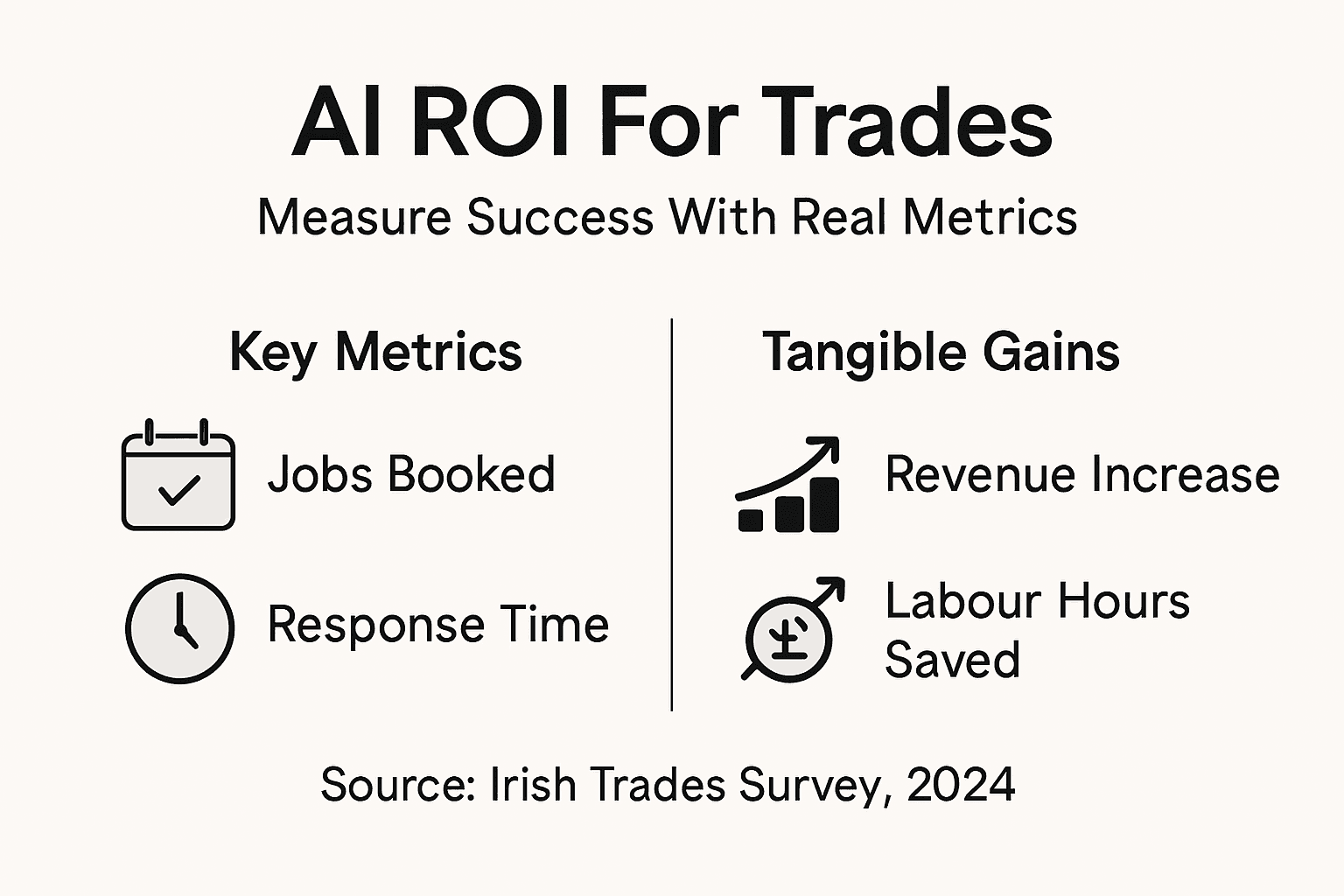
The challenge is capturing both obvious gains (more appointments booked) and real savings (labour hours freed). Let's cover the measurement methods that actually work for trades.
The Basic ROI Formula
ROI calculation starts simple: (Gain from Investment – Cost of Investment) ÷ Cost of Investment × 100 = ROI %.
For AI automation, this means:
- Investment cost: Software, setup, integration, training (typically £1,500–£3,500 for first 90 days)
- Gains: Additional revenue from new appointments plus labour hours saved
If your AI system costs £2,500 and generates £6,200 in additional revenue within 90 days, your ROI is 148%. That's real profit.
Tangible Metrics You Track
Effective ROI measurement integrates diverse financial and operational indicators to capture complete value from AI investments. Your measurement must address both revenue gains and cost reductions.
Setup tracking for these metrics before deployment:
- Calls answered: Percentage of inbound calls reaching human or AI
- Appointments booked: Total monthly appointments from AI-generated leads
- Lead conversion rate: Percentage of qualified leads becoming paying jobs
- Average job value: Revenue per completed appointment
- Labour hours recovered: Administrative time freed by automation
- Cost per appointment: Total AI investment ÷ appointments generated
- Customer response time: Minutes from call to confirmation
Calculating Revenue Impact
A plumbing business books 12 jobs monthly from phone calls. With AI, that climbs to 19 within 90 days. That's 7 additional jobs.
If each job averages £350 in revenue, those 7 jobs generate £2,450. Over 90 days, that's real money before counting future months.
Labour Savings Calculation
Your office staff spent 12 hours weekly on calls and booking. With AI, that drops to 2 hours. That's 10 hours weekly recovered—40 hours monthly.
At £16 per hour, that's £640 monthly in labour capacity redirected to higher-value work like estimates or billing follow-up. Over 90 days, that's £1,920 in recovered capacity.
Intangible Benefits Worth Documenting
Some gains don't appear directly on spreadsheets but matter for long-term ROI. Better customer experience increases repeat business and referrals. Faster response times build your reputation. These compound over time.
Document these separately from your primary ROI calculation, but track them. After six months, you'll see repeat rate improvements that boost lifetime customer value.
Below is a comparison of tangible and intangible ROI indicators for trades using AI automation:
| Indicator Type | Example Metric | Impact on Business |
|---|---|---|
| Tangible | Appointments booked monthly | Direct revenue increase |
| Tangible | Labour hours recovered | Lower admin costs |
| Intangible | Customer response speed | Improved reputation |
| Intangible | Repeat bookings rate | Long-term growth |
Measure your specific baseline metrics before AI deployment—without this foundation, you cannot prove ROI exists or identify what's working.
Common Measurement Pitfalls
Don't count vanity metrics. "Calls received" means nothing if half are spam or unqualified. Count qualified calls booked as appointments. Don't assume every booked appointment becomes revenue—track actual job completion and payment.
Avoid moving goalposts. Choose your metrics day one and track them consistently. If you change what you measure halfway through, you cannot compare results.
Pro tip: Export your baseline metrics into a spreadsheet on day one, then update weekly—after 90 days, you'll see clear trends showing exactly where AI generated value and where your business still needs improvement.
Risks, Barriers, and Mistakes to Avoid
AI automation isn't risk-free. Several trades businesses deploy systems poorly and see minimal ROI because they've overlooked critical barriers or made preventable mistakes. Understanding these pitfalls prevents wasted investment and failed implementations.
Let's identify what actually goes wrong and how to avoid it.
Data Quality and Privacy Issues
AI adoption requires robust data infrastructure and ethical guidelines to avoid common failures. Poor data quality undermines everything your AI system does. If your customer database contains duplicate records, incorrect phone numbers, or incomplete information, your AI inherits those problems.
Worse, handling customer data carelessly creates legal exposure. Irish businesses must comply with GDPR. Your AI system storing customer information without proper safeguards invites fines and reputation damage.
Protect yourself:
- Clean your customer database before AI deployment
- Encrypt stored customer data
- Document consent for automated calling
- Review GDPR compliance with your provider
Integration Failures
Your AI system must connect to your job management software. If integration fails, appointments book in the AI system but never reach your team's calendar. Customers get confirmed appointments whilst your staff sees nothing.
This kills ROI immediately. You're paying for a system generating appointments your team never sees.
Verify integration before going live:
- Test appointment booking in your actual job management software
- Confirm technicians receive notifications automatically
- Validate that customer information transfers accurately
- Run pilot tests with 10 calls before full deployment
Unrealistic Expectations on Timeline
Some business owners expect 300% ROI within 30 days. That's unrealistic. Most trades see solid improvements within 60–90 days, but early weeks involve setup, staff training, and system optimisation.
Expect improvement, not transformation, in week one. By week four, metrics should shift noticeably. This gradual improvement is normal and healthy.
Poor Staff Training
Your team needs to understand how AI changes their job. If they don't know how to access AI-captured lead information or respond to AI-qualified appointments, the system fails.
Invest 2–3 hours in staff training before launch. Show them exactly where leads appear, what customer information the AI collected, and how to follow up.
Ignoring Unqualified Leads
Your AI system filters inquiries, but some unqualified calls still get booked. A customer calling at midnight asking about a quote shouldn't become a scheduled appointment. Your AI needs clear rules about what constitutes a qualified lead for your business.
Work with your provider to set qualification criteria reflecting your actual service offerings and availability.
Most AI automation failures stem not from technology failures but from poor preparation—inadequate data, missing integration testing, or unclear qualification rules.
Over-Reliance on Automation
AI handles routine tasks brilliantly. It doesn't replace human judgment for complex situations. A customer with an unusual emergency needs human interaction, not pure automation.
Design your system for AI to handle standard inquiries and route complex situations to staff immediately.
Pro tip: Before deploying any AI system, audit your current data quality, test integration with your job management software, and create written qualification rules matching your actual business priorities—these three steps prevent 80% of implementation failures.
Unlock Real ROI in Irish Trades with Apex Emerald AI
Struggling with missed calls, lost leads, and inefficient booking processes in your plumbing, electrical, or HVAC business? This article highlights how AI automation transforms these pain points into measurable profits within 90 days by improving call answer rates, increasing appointment bookings, and recovering valuable labour hours. Imagine your AI voice agent answering every call instantly and qualifying leads seamlessly 24/7—freeing your team to focus on high-value work. Apex Emerald AI specialises in delivering these exact solutions tailored for Irish trades, combining voice interaction, operational automation, and lead qualification with smooth integration into your existing systems.
Take control of your business growth today with proven AI infrastructure designed for trades. Visit Apex Emerald AI to explore how our platform drives conversion optimisation and operational efficiency. Start measuring real ROI fast by implementing AI solutions that solve your biggest challenges. Book a strategic consultation or technical audit with us now and experience the difference. Learn more about our AI voice agents and omnichannel automation and how they deliver substantial revenue growth for Irish trades.
Frequently Asked Questions
What is the ROI of AI automation in trades?
The ROI of AI automation in trades measures the business impact generated by implementing AI systems. This includes quantifying increased revenue, reduced response times, and improved lead conversion rates from customer interactions handled by AI.
How can I measure the success of AI automation in my trade business?
You can measure the success of AI automation by tracking specific metrics such as appointment booking rates, total leads generated, response times, and labour hours recovered. These metrics provide insights into the financial and operational improvements made through automation.
What types of AI automation are most beneficial for trade businesses?
Key types of AI automation for trade businesses include voice-based customer interaction automation, operational data processing, lead qualification and routing, and multi-channel customer engagement automation. Each type addresses specific pain points and enhances overall efficiency.
How long does it take to see ROI from AI automation?
Most trade businesses begin to see measurable ROI from AI automation within 90 days of deployment. This period captures baseline performance metrics and shows improvements in call answer rates, booking rates, and overall productivity.