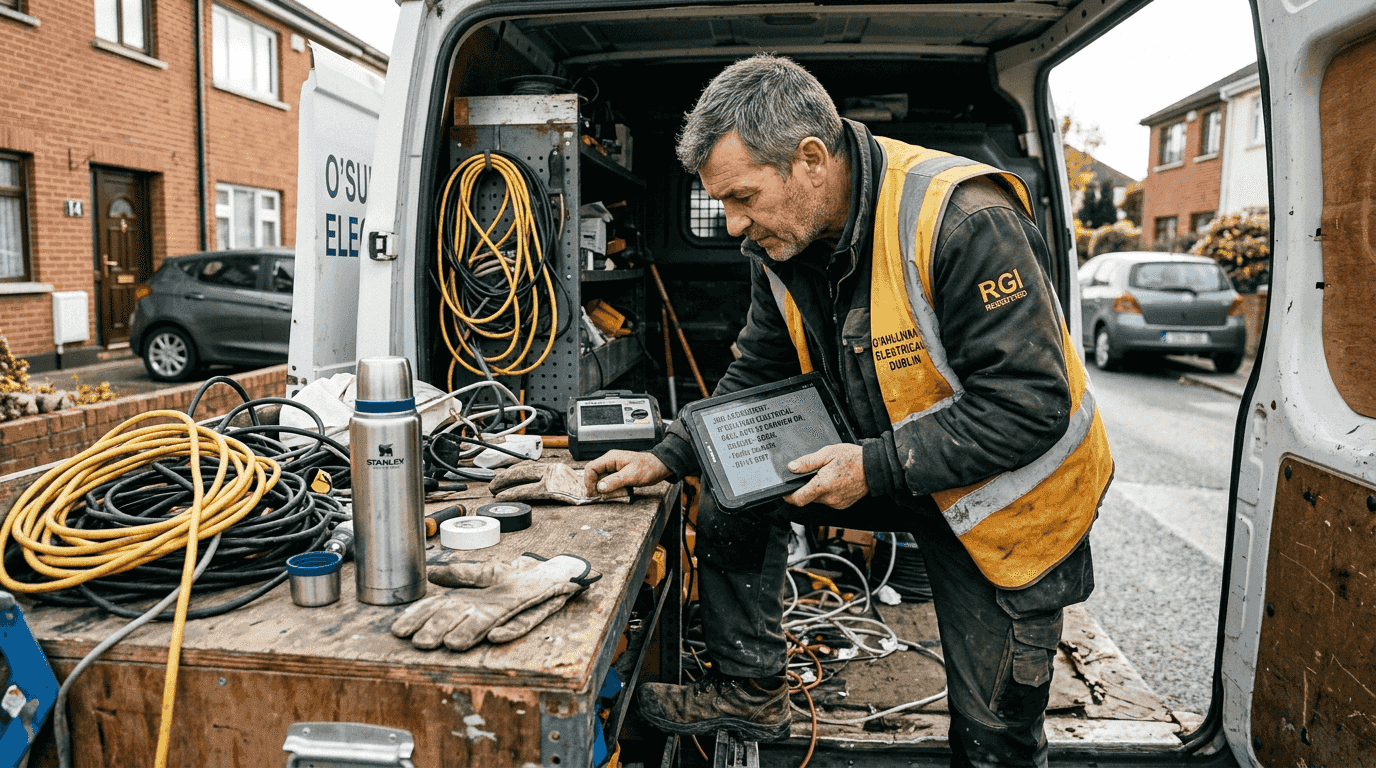
Doubling digital investment by Irish SMEs could add €8.3 billion to the economy, yet many trade business owners believe digital transformation requires a complete systems overhaul. This misconception prevents plumbers and HVAC contractors from accessing tools that streamline operations and boost revenue. Digital transformation isn't about replacing everything overnight. It's a strategic, phased approach to integrating technologies that solve specific pain points in your daily workflow. This guide walks you through practical steps to leverage digital tools and AI-driven solutions, helping Irish trades businesses enhance efficiency, improve customer satisfaction, and achieve measurable growth in 2026.
Table of Contents
- Understanding digital transformation in the trades sector
- The role of AI and digital tools in boosting efficiency and customer satisfaction
- Stepwise AI implementation for trades businesses
- Practical approach for trade businesses to adopt digital transformation and AI
- Future outlook and benefits of embracing digital transformation in 2026 and beyond
- How Apex Emerald AI supports your digital transformation journey
- Frequently asked questions
Key takeaways
| Point | Details |
|---|---|
| Economic impact | Digital investment by Irish SMEs could contribute billions to national economic growth |
| Phased approach | Successful transformation uses pilot projects and gradual implementation, not wholesale replacement |
| AI efficiency gains | Automated scheduling and dispatch reduce travel time by 15% and boost first-time fix rates |
| Skills development | Building internal capabilities ensures sustainable digital maturity and competitive advantage |
| Market imperative | Trades businesses delaying adoption risk falling behind as AI adoption accelerates across sectors |
Understanding digital transformation in the trades sector
Digital transformation in trades involves integrating technologies to improve operational efficiency, customer service, and revenue generation. For plumbers and HVAC contractors, this means moving beyond paper-based systems and manual processes to digital workflows that save time and reduce errors.
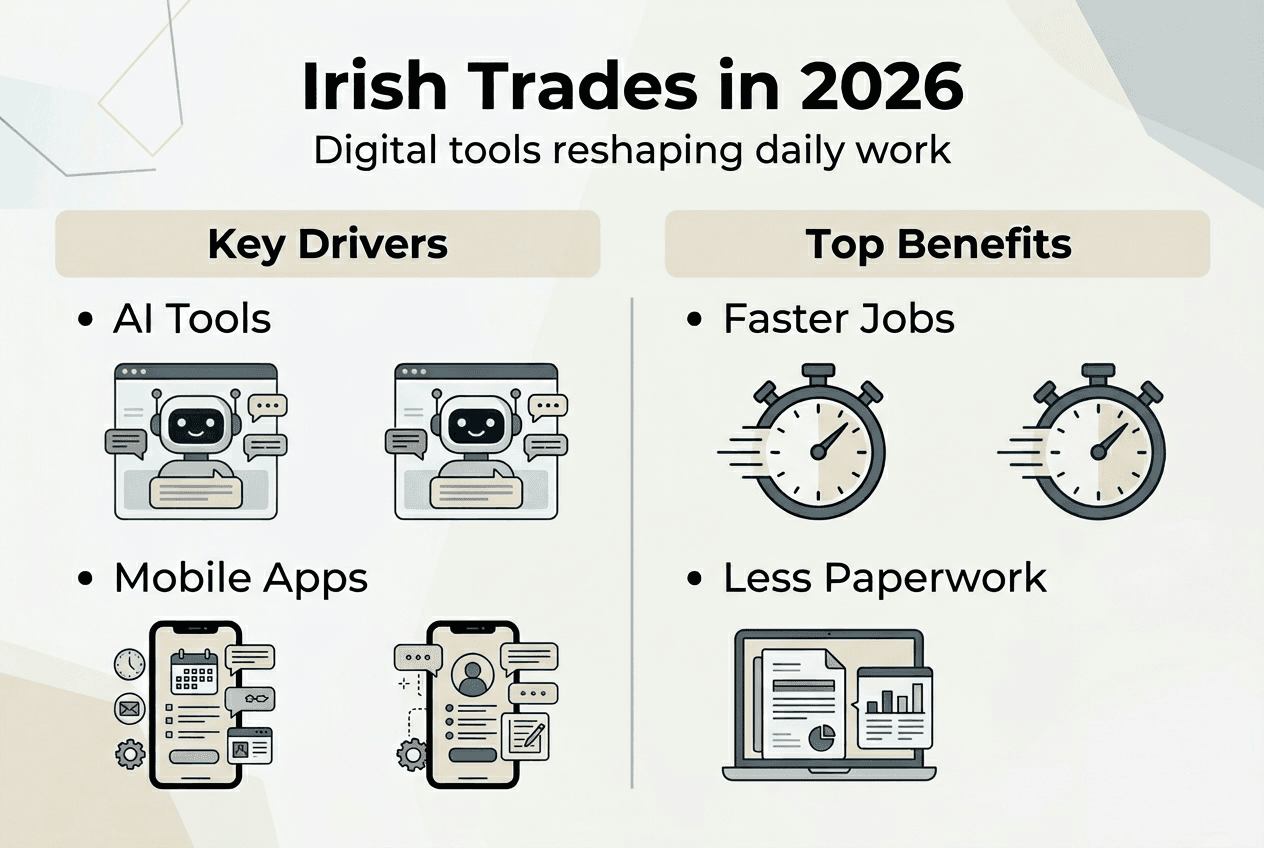
Key technologies driving transformation include cloud computing for centralised data access, mobile apps enabling real-time updates from job sites, data analytics revealing business insights, and AI-driven tools automating repetitive tasks. These aren't futuristic concepts. They're practical solutions addressing daily challenges like scheduling conflicts, invoice delays, and missed customer calls.
Irish SMEs demonstrate strong foundational digital engagement. Basic digital intensity reaches 74%, showing widespread adoption of email, websites, and simple software. However, only 39% achieve advanced digital maturity, indicating significant room for growth in sophisticated tool deployment.
For trades businesses, operational benefits include faster job completion through optimised routing, reduced fuel costs from efficient scheduling, and improved cash flow via automated invoicing. Customer service improves dramatically when clients receive instant appointment confirmations, real-time technician arrival updates, and digital payment options. You're not just keeping pace with competitors. You're setting new standards for service quality.
Challenges emerge at advanced adoption levels. Many trades businesses lack strategic roadmaps for technology integration, struggle with workforce digital skills gaps, and find it difficult to assess which tools deliver genuine ROI versus those that simply add complexity.
"The gap between basic and advanced digital maturity represents untapped potential for Irish trades businesses ready to move beyond foundational tools."
Bridging this gap requires understanding which technologies solve your specific problems rather than adopting tools because they're trendy. AI voice agents and automation solutions exemplify targeted technologies that address concrete pain points like after-hours call handling and appointment booking bottlenecks.
The role of AI and digital tools in boosting efficiency and customer satisfaction
AI-driven solutions transform how trades businesses manage daily operations. Intelligent scheduling systems analyse job locations, technician skills, traffic patterns, and appointment urgency to create optimal routes. This isn't theoretical. AI-driven dispatch reduces travel time 15% whilst increasing first-time fix rates by 10%.

Consider a typical plumbing business handling 20 jobs daily. Traditional scheduling relies on dispatcher experience and guesswork. AI systems process hundreds of variables simultaneously, identifying the most efficient technician for each job based on location, expertise, and current workload. You save fuel, complete more jobs, and reduce customer wait times.
Workflow automation eliminates repetitive administrative tasks consuming valuable hours. Digital systems automatically generate invoices after job completion, send payment reminders to overdue accounts, update inventory levels when parts are used, and schedule follow-up maintenance appointments. Businesses adopting digital solutions cut admin overhead 30% and achieve 20% higher project completion rates.
Pro Tip: Start with a narrow pilot project targeting your biggest operational pain point, whether that's scheduling inefficiency, invoice delays, or missed customer calls. Measure results over 90 days before expanding to other areas.
Customer satisfaction improves through multiple touchpoints. AI voice agents handle after-hours enquiries, qualifying leads and booking appointments whilst you sleep. Automated text updates keep customers informed about technician arrival times. Digital payment options eliminate cheque delays and reduce outstanding invoices.
Stepwise AI implementation for trades businesses
- Identify bottlenecks: Map your current workflow to pinpoint where time and money leak from your operation.
- Select focused solution: Choose one AI tool addressing your primary bottleneck rather than attempting wholesale transformation.
- Run controlled pilot: Test the solution with a subset of jobs or customers for 60-90 days.
- Measure concrete outcomes: Track specific metrics like call response times, appointment conversion rates, or invoice payment speed.
- Refine and expand: Adjust based on pilot learnings, then gradually extend to broader operations.
| Metric | Before AI | After AI | Improvement |
|---|---|---|---|
| Average travel time | 45 minutes | 38 minutes | 15% reduction |
| First-time fix rate | 72% | 79% | 10% increase |
| Admin hours weekly | 15 hours | 10.5 hours | 30% decrease |
| Project completion rate | 85% | 102% | 20% increase |
Strategic technology consulting helps you identify which metrics matter most for your specific business model and customer base. Not every improvement delivers equal value. Focus on changes that directly impact your bottom line.
Practical approach for trade businesses to adopt digital transformation and AI
Successful digital transformation follows a staged roadmap rather than attempting everything simultaneously. A phased approach starting with data foundations minimises risk whilst building internal capabilities for sustained growth.
Staged adoption framework
- Establish data foundations: Standardise how you capture customer information, job details, and financial records. Inconsistent data undermines any digital tool you implement later.
- Audit current digital maturity: Honestly assess which processes are already digital, which remain manual, and where the biggest efficiency gaps exist.
- Prioritise quick wins: Identify one or two processes where digital tools deliver immediate, measurable improvements with minimal disruption.
- Launch narrow pilots: Test selected solutions on a small scale, measuring results against clear benchmarks.
- Build internal skills: Train your team on new tools, creating champions who can troubleshoot issues and optimise usage.
- Scale systematically: Expand successful pilots across your operation whilst maintaining quality and addressing emerging challenges.
Data standards matter more than most business owners realise. If customer contact details live in three different formats across spreadsheets, paper files, and accounting software, no AI system can effectively automate communications. Spend time upfront creating consistent data structures.
Pro Tip: Document your current processes before implementing new tools. This baseline helps you measure genuine improvements and identify where digital solutions create unexpected complications.
Organisational readiness and workforce skills represent the biggest gaps in SME AI adoption. Your technicians might resist new mobile apps. Office staff may prefer familiar spreadsheets over cloud-based scheduling. Address these human factors through training, clear communication about benefits, and involving team members in solution selection.
Common pitfalls versus best practices
| Pitfall | Best Practice |
|---|---|
| Adopting tools without clear objectives | Define specific problems each tool must solve |
| Implementing multiple systems simultaneously | Focus on one area, prove value, then expand |
| Ignoring team input and training needs | Involve users early and provide comprehensive training |
| Choosing complex enterprise solutions | Start with simple tools matching your actual requirements |
| Neglecting data quality and consistency | Establish data standards before implementing digital tools |
Narrow, focused pilot projects mitigate implementation risks. Rather than replacing your entire scheduling system, test AI dispatch on one technician's route for a month. Measure concrete outcomes like jobs completed, fuel costs, and customer satisfaction. This controlled approach lets you identify issues, refine processes, and build confidence before broader rollout.
AI audit consultation services provide objective assessments of your current digital maturity and realistic roadmaps for improvement. External expertise helps you avoid expensive mistakes and accelerate time to value.
Building internal capabilities ensures digital transformation sticks. Train team members to troubleshoot common issues, optimise tool usage, and identify new automation opportunities. This knowledge prevents dependence on external consultants for every adjustment. AI implementation case studies demonstrate how trades businesses successfully developed these capabilities.
Future outlook and benefits of embracing digital transformation in 2026 and beyond
The AI market in construction and trades is experiencing explosive growth. AI in construction will grow from $1.8bn to $12.1bn by 2030, reflecting rapid technology maturation and widespread recognition of efficiency gains. Irish trades businesses embracing this shift now position themselves as category leaders.
Delaying digital adoption carries significant risks. As competitors implement AI scheduling, automated customer communications, and data-driven decision making, businesses relying on manual processes struggle to match service levels and pricing. Customer expectations evolve quickly. Once they experience instant appointment booking and real-time updates from one contractor, they expect the same from all providers.
Industry-wide performance suffers when most SMEs fail to adopt AI. This creates a collective action problem. Early adopters gain competitive advantages, but widespread transformation requires most businesses to participate. Irish trades businesses have an opportunity to lead rather than follow this transition.
Cultural readiness among SMEs is surprisingly strong. Many business owners recognise technology's potential and express willingness to invest. However, this enthusiasm collides with practical barriers like limited strategic planning, insufficient workforce skills, and difficulty identifying which solutions deliver genuine value versus marketing hype.
Competitive advantages through early adoption
- Premium positioning: Businesses offering superior service through digital tools command higher prices and attract quality-conscious customers.
- Operational efficiency: Lower costs from automation and optimisation improve profit margins without raising prices.
- Talent attraction: Skilled technicians prefer working for digitally advanced businesses with modern tools and efficient processes.
- Market expansion: Digital systems enable serving more customers without proportionally increasing overhead or compromising service quality.
- Data-driven decisions: Historical performance data reveals patterns guiding strategic investments and resource allocation.
Digital maturity isn't a destination. It's continuous evolution as new technologies emerge and customer expectations shift. AI voice agents for trades exemplify solutions unimaginable five years ago but rapidly becoming standard expectations. Businesses that establish cultures of experimentation and adaptation thrive in this environment.
"The question isn't whether to embrace digital transformation, but how quickly you can implement changes that position your business for sustained growth in an increasingly competitive market."
Government support for digital adoption is growing. Programmes offering grants, training, and consulting help offset implementation costs. Irish trades businesses should actively explore these resources rather than viewing digital transformation as purely self-funded investment.
How Apex Emerald AI supports your digital transformation journey
Navigating digital transformation alone is challenging. Apex Emerald AI specialises in AI voice agents and automation solutions designed specifically for Irish trades businesses like plumbing and HVAC contractors. We understand your unique operational challenges because we've solved them for businesses just like yours.
Our approach starts with assessing your current digital maturity through comprehensive audits. We identify quick wins delivering measurable ROI within 90 days, then build strategic roadmaps for longer-term transformation. Strategic technology consulting ensures you invest in solutions matching your actual needs rather than adopting technology for its own sake.
Real success stories demonstrate what's possible. Our clients report significant increases in lead conversion, appointment booking rates, and overall revenue through targeted AI implementation. AI implementation case studies showcase specific results across different trades categories and business sizes.
Pro Tip: Engage with expert consulting early in your digital transformation journey. External perspective helps you avoid common pitfalls, accelerate implementation timelines, and maximise return on technology investments.
Frequently asked questions
What is digital transformation for trades businesses?
Digital transformation means integrating technologies like cloud computing, mobile apps, and AI tools to improve how you run your business. For trades businesses, this typically starts with digitising scheduling, invoicing, and customer communications rather than replacing everything at once. The goal is solving specific operational problems through targeted technology adoption.
What are the main benefits of digital transformation for plumbers and HVAC contractors?
You'll complete jobs faster through optimised scheduling and routing, reduce administrative overhead by automating invoicing and payments, improve customer satisfaction with real-time updates and instant booking, and increase revenue by handling more jobs without proportionally increasing costs. Many businesses report 15-30% efficiency improvements within the first year.
How can a trades business start its digital transformation journey without big risks?
Begin with small pilot projects focused on your biggest pain point, whether that's scheduling inefficiency or missed customer calls. Run controlled tests for 60-90 days, measure concrete results, then expand successful solutions gradually. Expert audits help assess your digital readiness and identify where to start for maximum impact with minimum disruption.
What digital tools are most useful for trades businesses in Ireland?
Cloud-based scheduling systems optimise technician routes and job assignments. Mobile apps enable real-time updates from job sites. AI voice agents handle after-hours enquiries and appointment booking. Automated invoicing systems reduce payment delays. The best tools depend on your specific operational bottlenecks rather than following generic recommendations.
What challenges might Irish SME trades face in adopting AI and how can they overcome them?
Common challenges include lack of strategic roadmaps for technology integration, workforce resistance to new tools, and difficulty assessing which solutions deliver genuine value. Overcome these through phased adoption starting with narrow pilots, comprehensive team training that addresses concerns early, and expert consulting to guide solution selection and implementation strategy.
Recommended
- AI & Automation Audit Services | Strategic Technology Consulting | Apex Emerald AI
- AI & Automation Audit Services | Fractional CTO Ireland | Apex Emerald
- AI Voice Agents for Trades Ireland | Apex Emerald AI
- AI Voice Agents & Automation Solutions | Trades Business AI | Apex Emerald
- What Is Digital Transformation—Impact for CIOs in 2026
- Digital transformation in fitness studios:... - Finegym