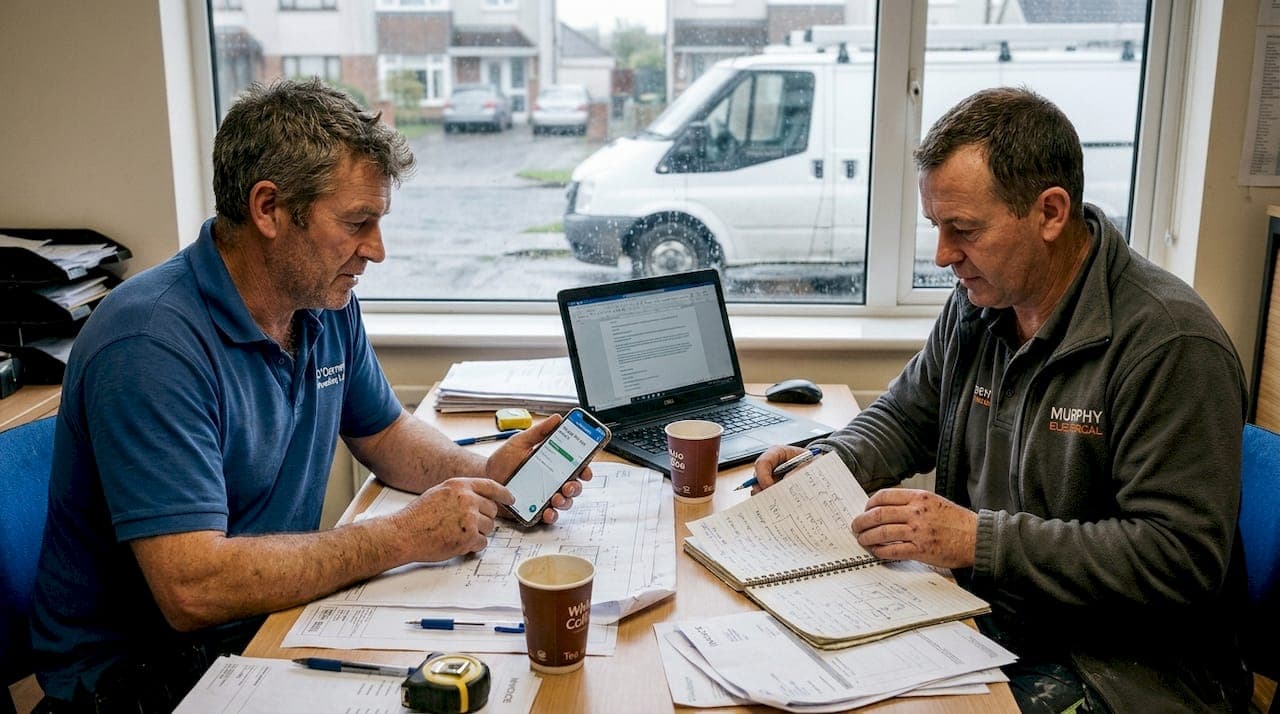
You've probably heard that AI infrastructure is only for tech giants with massive budgets, but that's no longer true. Today, plumbers, HVAC engineers, and electrical contractors across Ireland are using affordable cloud-based AI solutions to automate scheduling, predict equipment failures, and handle customer calls around the clock. This shift is cutting service times by 40% and boosting revenue by over 20% for forward-thinking trades businesses. In this guide, you'll discover what AI infrastructure actually means for your business, how to choose the right tools without overspending, and practical steps to start small and scale confidently.
Table of Contents
- What is AI infrastructure and why does it matter for trades businesses?
- Tailoring AI infrastructure for plumbers, HVAC, and electrical contractors in Ireland
- Understanding costs, challenges, and performance nuances of AI infrastructure
- Getting started with AI infrastructure in your trade business
- Discover Apex Emerald's AI solutions for Irish trades businesses
- Frequently asked questions
Key takeaways
| Point | Details |
|---|---|
| AI infrastructure combines hardware, software, and data systems | These layers work together to power machine learning applications that automate tasks and improve decision-making. |
| Cloud and edge solutions fit small trades businesses perfectly | SaaS tools for scheduling and IoT sensors for predictive maintenance deliver quick wins without major capital investment. |
| Productivity gains reach 40% in service delivery | AI can reduce service times significantly whilst increasing revenue by 21% through better scheduling and customer engagement. |
| Starting small maximises ROI and reduces risk | Pilot one or two high-impact applications like call handling or maintenance alerts before scaling. |
| Team training and data quality determine success | Without proper staff onboarding and clean data inputs, even the best AI tools underperform. |
What is AI infrastructure and why does it matter for trades businesses?
AI infrastructure is the backbone combining hardware, software, and data pipelines enabling scalable machine learning model training and deployment. For trades businesses, this isn't about building data centres or hiring data scientists. It's about understanding three core layers that make AI work: the compute power (usually cloud servers or edge devices), the software frameworks that run AI models, and the data pipelines that feed those models with real information from your operations.
Think of it like your van's engine system. The hardware is your engine block, the software is the fuel injection system, and the data is the fuel itself. All three must work together smoothly. Most small businesses start with cloud-based solutions where providers like Google, Microsoft, or specialised platforms handle the heavy lifting. You simply plug in through software applications tailored to your needs.
Understanding this foundation helps you avoid two common traps: overpaying for features you don't need, and choosing tools that can't scale as your business grows. When evaluating top AI tools for plumbers, you're really assessing whether their underlying infrastructure matches your operational requirements and budget constraints.
Pro Tip: Focus on solutions that specifically address your business needs, whether that's missed calls, scheduling chaos, or equipment downtime, rather than chasing the latest AI trends.
Key infrastructure components for trades:
- Cloud computing platforms that host AI applications without requiring on-site servers
- Software frameworks like scheduling engines, natural language processing for calls, and predictive analytics
- Data collection systems including job management software, IoT sensors, and customer interaction logs
- Integration points connecting AI tools to your existing CRM, accounting, and field service systems
The beauty of modern AI infrastructure is modularity. You don't need to adopt everything at once. Start with one application that solves your biggest pain point, then expand as you see results and build confidence.
Tailoring AI infrastructure for plumbers, HVAC, and electrical contractors in Ireland
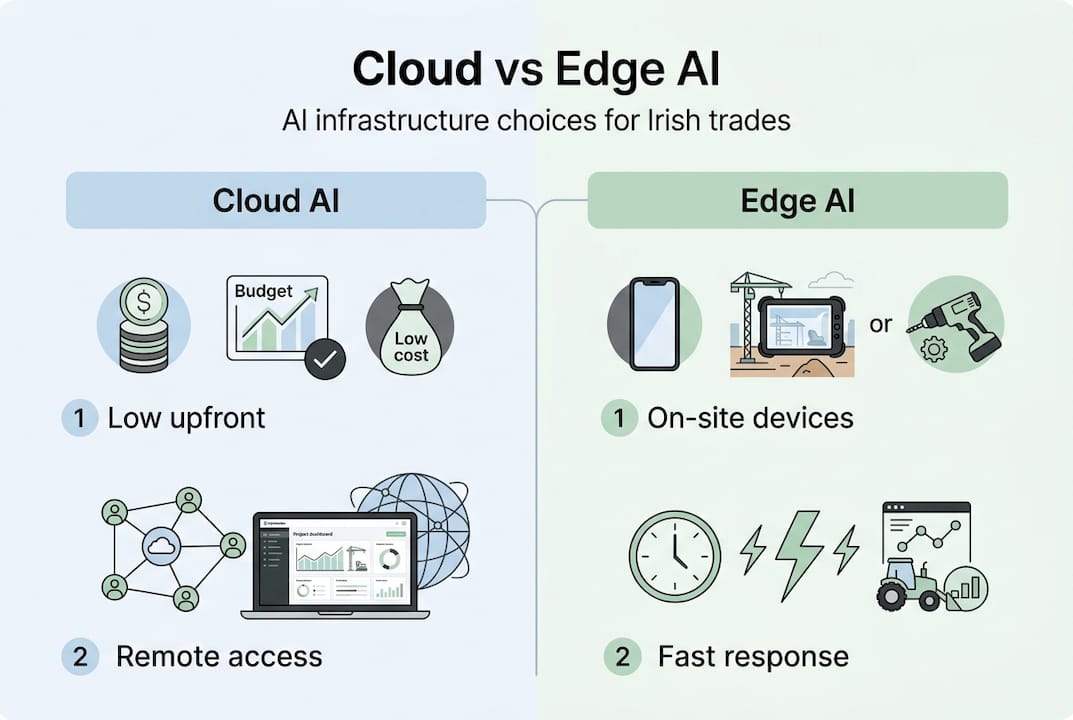
For small trade businesses, AI infrastructure often means cloud SaaS or edge IoT for scheduling, predictive maintenance, and customer service. Cloud-based software-as-a-service tools handle tasks like answering calls, booking appointments, and qualifying leads without any hardware investment on your part. You pay monthly subscriptions and access everything through web browsers or mobile apps.
Edge AI takes a different approach by processing data locally on devices installed at customer sites or in your workshop. IoT sensors combined with AI enable predictive maintenance detecting HVAC or boiler anomalies via edge processing, cutting energy use by 25%. For example, smart thermostats in commercial buildings can spot unusual patterns indicating imminent compressor failure, alerting you before the system breaks down completely.
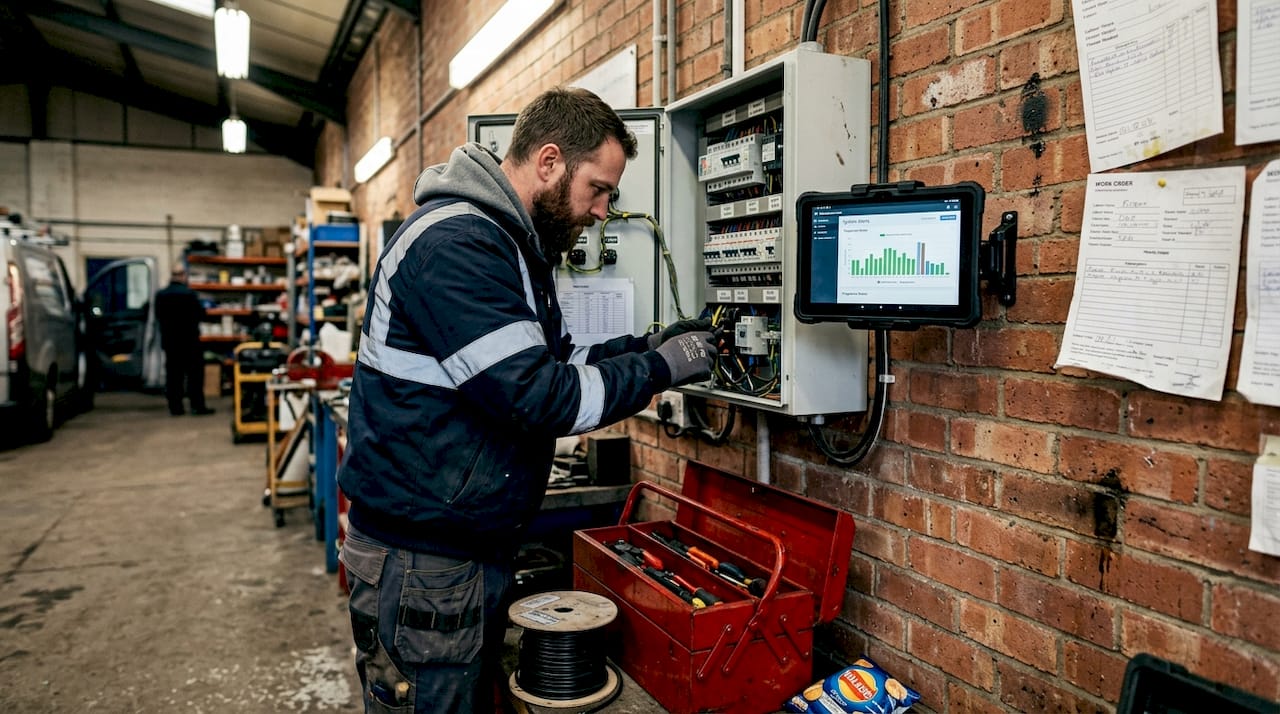
In Ireland, you'll find AI-ready technologies already deployed in modern heating systems, building management systems using KNX protocols, and heat pumps with built-in learning capabilities. These systems collect operational data that AI can analyse to optimise performance and predict service needs. This means you can offer proactive maintenance contracts rather than reactive emergency calls, improving customer satisfaction and stabilising your revenue.
Comparing cloud versus edge AI benefits:
| Factor | Cloud AI | Edge AI |
|---|---|---|
| Initial cost | Low (subscription only) | Moderate (sensors and devices) |
| Performance | Requires internet connection | Works offline, real-time processing |
| Ease of use | Very simple, no technical skills | Requires basic setup and monitoring |
| Best for | Call handling, scheduling, CRM | Predictive maintenance, equipment monitoring |
Most successful implementations combine both approaches. Your AI voice agent integration workflow runs in the cloud, handling customer calls 24/7, whilst edge sensors monitor boilers or HVAC units at client sites, feeding maintenance alerts back to your scheduling system.
Pro Tip: Start with one or two AI applications where you see quick ROI, such as automating appointment booking or setting up maintenance alerts for your largest commercial clients.
Practical AI applications for Irish trades:
- Virtual receptionists managing inbound calls, capturing leads, and booking appointments during evenings and weekends
- Predictive maintenance systems monitoring equipment health and alerting you before failures occur
- Smart scheduling tools optimising routes and job assignments based on location, skills, and urgency
- Customer engagement platforms sending automated follow-ups, reminders, and satisfaction surveys
The role of AI in customer service for trades extends beyond just answering phones. It's about creating seamless experiences where customers get instant responses, accurate quotes, and reliable service delivery, all whilst you focus on the actual work rather than administrative tasks.
Understanding costs, challenges, and performance nuances of AI infrastructure
Budgeting for AI infrastructure means accounting for several cost components beyond the obvious subscription fees. Software licences typically range from €50 to €500 monthly depending on features and call volumes. Data management costs include storage for customer records, job histories, and sensor readings. If you opt for edge devices, expect €200 to €1,000 per sensor installation depending on complexity.
High initial costs and data quality needs are challenges; hybrid cloud and edge solutions balance cost and performance. Cloud-only setups minimise upfront investment but create ongoing dependencies on internet connectivity and monthly fees. On-premises infrastructure offers long-term savings but requires technical expertise you probably don't have in-house. Hybrid approaches give you flexibility to run critical functions locally whilst leveraging cloud power for advanced analytics.
Comparing infrastructure deployment models:
| Model | Upfront cost | Monthly cost | Scalability | Technical complexity |
|---|---|---|---|---|
| Cloud only | Very low | €100-€500 | Excellent | Minimal |
| On-premises | €5,000-€20,000 | Low | Limited | High |
| Hybrid cloud/edge | €1,000-€5,000 | €150-€600 | Very good | Moderate |
Data quality determines whether your AI investment pays off or disappoints. Rubbish in, rubbish out applies here more than anywhere. If your job management system contains incomplete customer records, duplicate entries, or outdated contact details, AI tools will struggle to deliver accurate insights or personalised service. Plan to spend time cleaning your data before launching AI applications.
Training your team is equally critical. Research shows that AI productivity gains in trades can reach up to 50% and revenue increases by 21%, but only when workers understand how to use the tools effectively and trust the recommendations. Schedule hands-on training sessions, create simple reference guides, and designate a team member as your AI champion who can troubleshoot issues.
"AI boosts productivity most for lower-skilled workers when paired with proper training and support, enabling them to deliver higher-quality work faster."
Common pitfalls to avoid during AI adoption:
- Choosing tools based on features rather than solving specific business problems
- Underestimating the time needed for data cleanup and system integration
- Skipping team training and expecting instant adoption
- Failing to measure performance metrics before and after implementation
- Overlooking vendor support quality and responsiveness
Understanding AI automation ROI in trades requires tracking concrete metrics like call answer rates, appointment booking percentages, first-fix success rates, and customer satisfaction scores. Without baseline measurements, you can't prove the value of your investment or identify areas needing adjustment.
Getting started with AI infrastructure in your trade business
Launching AI infrastructure successfully means taking deliberate, measured steps rather than rushing into expensive commitments. Start small with SaaS AI tools like receptionist automation or predictive maintenance and measure impact to build confidence and ROI. This approach lets you learn what works for your specific business without risking major capital.
Step-by-step AI implementation roadmap:
- Assess your biggest operational pain points through team discussions and customer feedback analysis
- Trial one or two SaaS AI tools addressing those specific challenges with free trials or pilot programmes
- Train your staff thoroughly on using the new tools and interpreting AI recommendations
- Measure performance improvements using clear metrics like response times, booking rates, or equipment uptime
- Scale gradually by adding complementary AI applications once initial tools prove their value
- Review and optimise quarterly based on performance data and team feedback
Focus on high-impact use cases where AI delivers immediate, measurable value. For most trades businesses, this means starting with customer-facing applications like call handling or appointment scheduling. These tools show quick wins that build team confidence and customer satisfaction simultaneously.
Pro Tip: Integrate AI tools with your existing CRM or scheduling software for seamless operations rather than creating separate systems that require duplicate data entry.
Training teams and ensuring data quality underpin successful AI adoption in trades. Schedule regular training sessions, not just during initial rollout. As AI tools evolve and add features, your team needs ongoing education to maximise value. Create simple documentation showing common scenarios and how to handle them using AI assistance.
Vendor support matters enormously for small businesses without dedicated IT staff. When evaluating AI solutions, test their support responsiveness during the trial period. Can you reach a real person quickly? Do they understand trades business operations? Are there hidden fees for support calls? These factors often matter more than feature lists.
Your AI readiness checklist for trades should include technical prerequisites like reliable internet connectivity, compatible job management software, and clean customer databases. It should also cover organisational readiness: team willingness to adopt new tools, management commitment to training, and clear success metrics.
Choosing the right AI tools for your business:
- Prioritise solutions designed specifically for trades businesses rather than generic platforms
- Verify integration capabilities with your existing software stack
- Check vendor track records and customer reviews from similar businesses
- Ensure transparent pricing without hidden fees or long-term lock-ins
- Confirm data security and GDPR compliance for Irish operations
Explore top AI tools for business managers to understand which platforms offer the best combination of features, support, and value for your specific trade category. Different tools excel in different areas, so matching capabilities to your needs prevents overpaying for unused features.
Discover Apex Emerald's AI solutions for Irish trades businesses
Now that you understand AI infrastructure fundamentals and implementation strategies, you're ready to explore solutions built specifically for Irish trades businesses. Apex Emerald specialises in AI voice agents and automation tailored for plumbers, HVAC engineers, and electrical contractors, helping you capture every lead, automate scheduling, and deliver exceptional customer service around the clock.
Our platform integrates seamlessly with popular job management systems, offering measurable ROI within 90 days through improved conversion rates and operational efficiency. With transparent pricing designed for small businesses and no hidden fees, you can budget confidently whilst scaling your AI capabilities as your business grows. We also provide AI audit and consultation services to assess your current operations and create a customised implementation roadmap.
Whether you're just starting your AI journey or ready to upgrade existing tools, our team understands the unique challenges facing Irish trades businesses. Contact us today to discover how AI infrastructure can transform your customer experience and bottom line.
Frequently asked questions
What is AI infrastructure in simple terms?
AI infrastructure combines the hardware, software, and data systems needed to run AI applications in your business. For trades businesses, this typically means cloud-based software handling tasks like call answering and scheduling, plus optional edge devices monitoring equipment at customer sites. You don't need to understand the technical details, just how the tools solve your specific operational challenges.
How can AI improve my plumbing or HVAC business specifically?
Predictive maintenance using AI sensors can detect equipment problems before failures occur, reducing emergency callouts and improving customer satisfaction. AI scheduling optimises your routes and job assignments, cutting travel time and fuel costs. Virtual receptionists handle calls 24/7, capturing leads you'd otherwise miss. Research shows AI in plumbing can cut service times by 40% and boost revenue by 21% through these combined improvements. Explore AI tools for plumbers to see specific applications.
What are the cost considerations of adopting AI infrastructure in small trades?
Initial costs include software subscriptions ranging from €100 to €500 monthly, depending on features and call volumes. If you add edge sensors for predictive maintenance, expect €200 to €1,000 per installation. Cloud solutions offer lower short-term cost; hybrid and on-premises can save money in the long run but require higher upfront investment. Measuring ROI early through metrics like improved booking rates and reduced missed calls helps justify the investment. Review AI automation ROI in trades for detailed cost-benefit analysis.
How do I start integrating AI infrastructure into my trade business?
Pilot AI on one or two key tasks like call handling or appointment scheduling where you'll see immediate impact. Starting small with SaaS AI solutions and measuring impact is recommended before expanding. Train your team thoroughly and focus on cleaning your customer data for best results. Use your AI readiness checklist for trades to ensure you've covered technical and organisational prerequisites before launching.